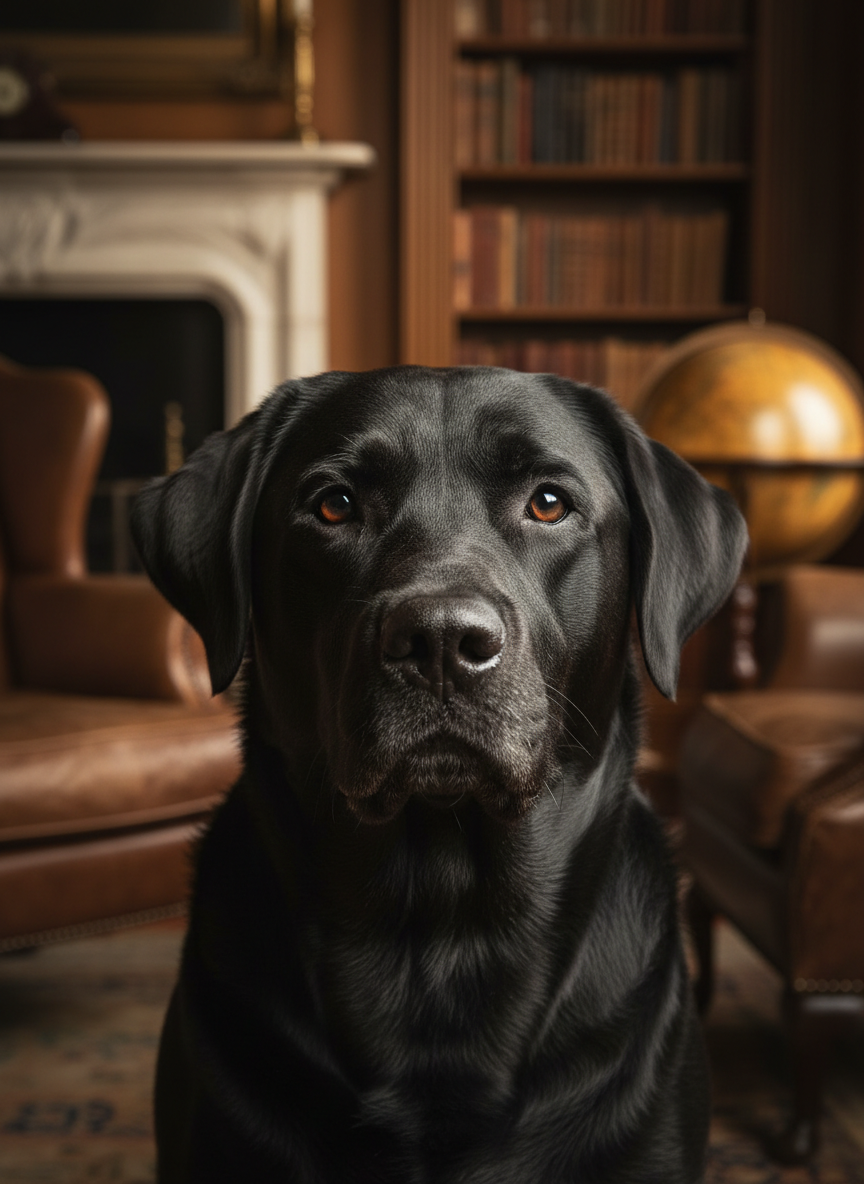
True refinement in a companion dog is not performance for its own sake. It is the quiet confidence to move through family life with composure, consideration and ease.
The Quiet Confidence of a Well-Mannered Companion
There is a particular ease to life with a dog who understands the household. They settle while conversation unfolds, move thoughtfully through a doorway, and greet a visitor without turning the moment into an event. Such manners are often mistaken for a naturally placid temperament. In truth, the most dependable composure is cultivated: a considered education, repeated gently, until good choices become familiar.
For families considering a pre-trained companion, the distinction matters. Training is not a collection of polished tricks reserved for a viewing. It is the practical language that allows a dog to share a home with confidence, while leaving room for warmth, character and the simple pleasures of being a dog.
Manners are a shared language
A well-mannered dog is not expected to anticipate every human thought. Rather, dog and family learn a small number of useful conventions. A pause at a doorway prevents a dash into a busy space. A comfortable place cue gives the dog somewhere to rest while a meal is prepared or guests arrive. A recall, strengthened through generous reinforcement, makes it possible to reconnect in a safe setting.
These behaviours are most valuable when they are taught with clarity. The cue should mean the same thing from one family member to another; the reward should arrive at the moment the dog makes the right choice; and the expectation should be fair for the dog's age, experience and surroundings. Consistency does not require severity. It asks the household to communicate in a way the dog can understand.
Calm is not the same as stillness
A composed companion is not a dog who never moves, plays or expresses enthusiasm. Labradors, in particular, are retrievers: sociable, curious dogs who often delight in carrying objects, exploring scents and participating in family life. Their natural exuberance deserves thoughtful direction, not suppression.
The useful skill is recovery. Can the dog become excited when a familiar person arrives, then settle when the greeting is complete? Can they enjoy a walk and later rest comfortably at home? Can they investigate a new environment at their own pace, then return their attention to the person they trust? These transitions are a more meaningful measure of household readiness than stillness alone.
A training programme should therefore balance structure with opportunity. Daily walks, scent-led exploration, play and quiet rest all have a place. A dog who has appropriate outlets is better prepared to make settled choices indoors. The family's routine matters too: predictable meals, exercise and sleep help a companion understand the shape of each day.
The art of the introduction
Visitors are one of the first tests of a dog's manners, and one of the clearest examples of why management supports training. Before the door opens, decide where the dog will be and who will handle the lead if one is needed. Invite the dog to a familiar place, reward the pause and let the visitor enter without reaching over the dog's head or crowding them.
Once everyone is settled, allow a greeting only if the dog is relaxed and the visitor is comfortable. A brief, unforced interaction is often better than prolonged excitement. If the dog chooses to step away, honour that choice. Composure is built by giving the dog a predictable way to participate and an equally acceptable way to take a break.
The same principle applies to children, other pets and outings. Close supervision, appropriate boundaries and calm introductions are not signs of mistrust. They are the foundations on which trust can grow.
What pre-training can, and cannot, promise
A pre-trained companion arrives with valuable foundations: an established routine, exposure to household life and practical skills that have been reinforced over time. This can make the beginning more intelligible for a family than starting with a young puppy and building every habit from the first day.
It does not mean the dog arrives as a finished object, nor that the family can remain a spectator. Dogs are individuals, and a change of home brings new people, sounds, surfaces and expectations. Even a confident dog needs time to learn the particular rhythm of a new household. The family's cues, rewards and boundaries must become familiar before old skills feel effortless in their new setting.
A thoughtful handover is therefore as important as the training that precedes it. Each family member should learn how to give the dog's cues, when to reward, how to manage the lead and where the dog can rest without interruption. Follow-up guidance helps answer the practical questions that appear once daily life resumes: the first school run, the first dinner with guests, the first weekend away.
Composure grows at home
Begin with a modest first week. Keep the dog's world small enough to feel legible: familiar routes, a calm sleeping space, measured introductions and a steady routine. Practise one or two useful cues in short moments, then allow the dog to rest. Do not mistake immediate compliance for settled belonging; trust is quieter and takes time.
As confidence grows, add variety gradually. Invite a trusted friend, explore a new walk, or practise settling while the family has tea. Reward the choices you hope to see again, and adjust the environment when a situation is too demanding. If the dog seems persistently worried or behaviour changes unexpectedly, seek appropriate professional or veterinary guidance.
The standard worth keeping
The finest manners are not theatrical. They are the small, reliable courtesies that make shared life feel easy: a pause, a check-in, a comfortable rest, a greeting given with consideration. They allow a dog to be fully present in family life without being asked to carry its every moment.
A well-prepared companion offers a beautiful beginning. The family's steady participation turns that beginning into a lasting relationship, one shaped by mutual understanding rather than expectation alone.
Begin the Conversation
If this resonated, we would be delighted to discuss our available dogs, training levels, and how a Manor & Hound companion might fit into your family's life. Each placement begins with a private consultation.