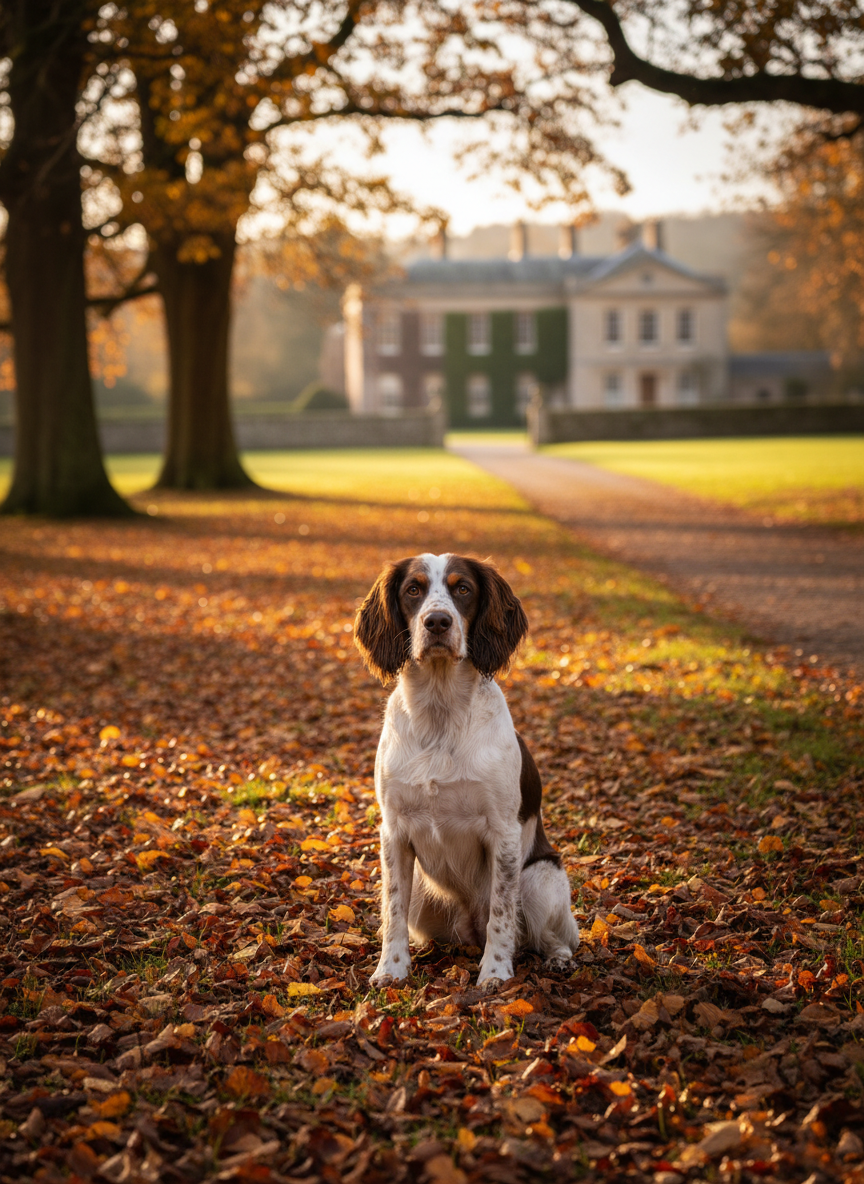
Choosing a dog is less about selecting a breed from a list and more about matching temperament, daily rhythm and expectations. A considered guide for families seeking a lasting companion.
A Companion Chosen for Your Life: The Questions Worth Asking Before You Begin
The most successful match between a family and a dog rarely begins with the question, “Which breed should we choose?” It begins more quietly: What does an ordinary Tuesday look like in this household? Who will share the dog’s care? How much activity, company and structure can the family offer, not only during the first exciting months, but for years to come?
A companion is not an accessory to a way of life. They become part of its rhythm. The care taken before a dog arrives is therefore not an administrative formality; it is the beginning of a relationship built on mutual suitability. At Manor & Hound, we believe that a considered match is more valuable than a hurried choice.
Begin with the household, not the photograph
It is natural to be drawn to a particular appearance. A Labrador’s open expression or a Spaniel’s lively attention may capture the imagination. Yet a photograph offers only a moment. It cannot tell you how a dog responds to a full house, whether they settle comfortably after a walk, or how much daily engagement they need to feel content.
Consider the household as it genuinely is. Are there young children, older relatives, frequent visitors or other animals? Is the home usually quiet, or does it welcome a steady procession of people? Does the family spend weekends outdoors, travel often, or prefer long evenings at home? None of these circumstances rules a dog in or out by itself. Together, they form the setting in which a companion will flourish.
Be honest about practical constraints, too. A dog needs time, veterinary care, grooming and reliable arrangements when the family is away. Some coats require more attention than others. A young, energetic dog may need a different rhythm from a mature companion. A well-matched dog should enrich family life, not depend upon a version of it that exists only in an ideal week.
Temperament is more than a label
Words such as “gentle”, “confident” and “family-friendly” can be useful starting points, but they are not complete descriptions. Temperament is expressed in particular circumstances. A dog may be sociable with familiar people yet reserved around strangers. They may enjoy an active morning and then settle peacefully at home. Another dog may be affectionate but find sudden noise difficult.
Ask for specific examples rather than broad assurances. How does the dog behave when a visitor enters? What helps them relax after excitement? How do they respond when asked to pause before a meal or walk through a doorway? What situations do they find challenging? Clear, measured answers allow a family to imagine daily life more accurately.
No dog can be guaranteed to behave identically in every home. The family’s response, routines and environment matter. Good preparation should describe the dog honestly, including their strengths and the support that will help them succeed.
Think beyond the first impression
A meeting with a prospective companion should be unhurried and supported. Notice whether the dog can engage with you, explore at their own pace and recover after a new experience. Ask whether the meeting reflects the circumstances in which the dog was raised and trained. A quiet introduction is often more informative than a busy display designed to impress.
Families considering a pre-trained dog should understand exactly what “pre-trained” means in that individual case. Which everyday skills has the dog practised? In what settings? How does the dog travel, settle, walk on lead and respond to household routines? Training creates foundations, not a finished product that no longer requires care. A new home is still a major change, and the dog will need time to learn its particular patterns.
A reputable placement should be prepared to explain the dog’s history, veterinary care, training approach and ongoing support. The family should also have the opportunity to discuss questions without pressure. Trust is built through openness, not urgency.
Match energy and expectations
The right companion is not necessarily the dog who can do the most. It is the dog whose needs the family can meet consistently. Ask how much exercise and mental engagement the dog usually enjoys, and what a balanced day looks like for them. A retriever may delight in walks, retrieving games and time with their people, but even within a breed, individuals vary. A dog who has been raised thoughtfully still needs purposeful activity and companionship.
Consider what the family hopes to do together. Will the dog accompany you on long country walks, join a household with children, or provide quiet company for someone working from home? The answer may suggest useful qualities, but flexibility matters. Family life changes, and the dog’s place in it should not depend on a narrow job description.
If there are children, discuss supervision and boundaries before the dog arrives. Children should learn to let a dog sleep and eat undisturbed, to use gentle hands and to respond when the dog seeks space. Adults remain responsible for managing interactions. Kindness to a dog is taught through everyday example.
Plan for the transition, not merely the arrival
The first days are only the beginning. Agree on household routines, sleeping arrangements, feeding plans and responsibilities in advance. Keep early introductions calm. Give the dog a quiet place to rest and resist the urge to invite every friend and relative to meet them at once. Even a confident dog benefits from predictability while learning a new home.
For a pre-trained companion, preserve familiar cues and routines where possible, then adjust gradually. Training should be maintained through fair, consistent reinforcement. If the dog is unsure, reduce the pressure and make the next step easier. A placement that includes careful handover and follow-up gives the family guidance as questions arise, rather than leaving them to interpret every new behaviour alone.
Questions that reveal a thoughtful match
Before making a decision, ask: What does this dog enjoy? What helps them settle? What kinds of homes have suited them well? Which skills are established, and what should the family continue practising? Are there health, grooming or behavioural considerations to understand? What support is available after placement? Does the organisation welcome further questions if the match feels uncertain?
The answers need not promise perfection. They should offer clarity. The aim is not to find a dog without needs, but to understand those needs and decide whether they fit the life you can provide.
A relationship that begins with care
Choosing a companion well is an act of consideration towards both the dog and the family. It asks for patience, practical honesty and attention to the individual behind the breed. When temperament, household rhythm and expectations are thoughtfully aligned, the dog’s arrival feels less like a leap into the unknown and more like the next step in a relationship already treated with respect.
A beautiful match is not simply found. It is understood, prepared for and nurtured, one ordinary day at a time.
Begin the Conversation
If this resonated, we would be delighted to discuss our available dogs, training levels, and how a Manor & Hound companion might fit into your family's life. Each placement begins with a private consultation.