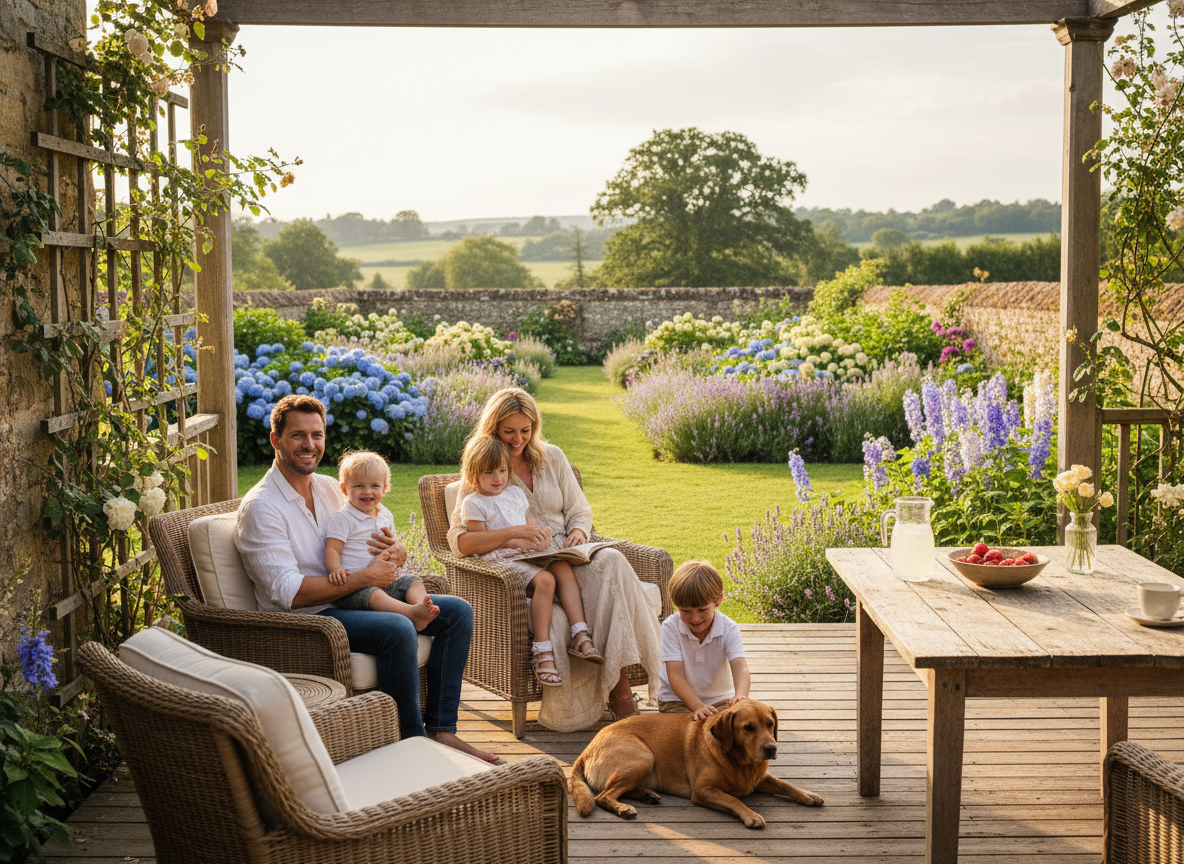
The Labrador’s heritage is part of its charm. Discover how thoughtful games, measured activity and good manners let a retriever’s natural qualities flourish in family life.
The Labrador at Home: Honouring a Retriever’s Instincts in Family Life
The Labrador’s appeal is not difficult to understand. Warm-hearted, sociable and eager to be included, the breed has become a cherished companion in households around the world. Yet the qualities that make a Labrador engaging at home are connected to a longer history: this is a retriever, bred to work alongside people, notice what is happening and carry objects with purpose. A graceful family life does not ask the dog to set those instincts aside. It gives them an appropriate place.
Understanding that heritage helps a family see behaviour more clearly. A young Labrador who carries a shoe may be seeking an outlet for a natural urge, rather than expressing a wish to damage the home. A dog who searches every pocket for food has discovered how rewarding scent can be. A companion who greets each visitor with enthusiasm may be responding to a deep social interest. The answer is not to indulge every impulse, nor to suppress the dog’s character, but to shape it with composure and good judgement.
The usefulness of a working mind
Retrievers were selected for attention, persistence and cooperation. In a household, those traits can become wonderful qualities: a dog who enjoys learning, carries a soft toy to welcome a familiar person, or waits for direction before beginning an activity. They can also make a Labrador inventive. If the day offers too little occupation, a determined dog may create a project from a garden border, a laundry basket or the contents of a handbag.
Purpose need not be elaborate. A short search for a favourite toy, a quiet retrieve in a safe area, or a few minutes of structured learning can provide an outlet. Ask the dog to wait while a toy is placed nearby, then release them to find it. Practise carrying a suitable object from one room to another, or reward a calm handover. The exercise is not about producing a field trial champion; it is about giving a natural inclination a polite and satisfying form.
A Labrador's enthusiasm for food can be used thoughtfully in training. Scatter a portion of the daily meal in a clean, safe area for supervised sniffing, or use some of it to reinforce a calm response. Keep food appropriate to the dog's health and dietary needs. If there are children, teach them not to approach the dog while it is eating or carrying a valued item, and do not leave food games unsupervised.
Activity should leave room for recovery
Labradors are often described as energetic, but activity is not simply a matter of distance. Young dogs need exercise matched to their age and development, and all dogs benefit from rest. Repetitive high-impact games can be unsuitable, particularly for growing puppies or dogs with health concerns. Discuss exercise with your veterinarian, especially if your companion is young, older, recovering from injury or showing signs of discomfort.
Variety brings balance. A steady walk with time to sniff, a brief training game, a gentle retrieve and an undisturbed rest may serve a dog better than an hour of relentless throwing. Teach the dog to pause between rounds. The ability to disengage is part of a well-mannered sporting companion, not a reduction in its spirit.
Water and temperature deserve particular attention. A dog who is keen to retrieve may continue long after it is sensible to stop. In warm weather, choose cooler periods, carry water and end activity if the dog is showing signs of heat stress. Never leave a dog in a parked vehicle. For any urgent symptoms such as collapse, excessive distress or weakness, contact a veterinarian immediately.
Mouthiness and carrying can be guided
Many Labradors enjoy having something in their mouths. Provide safe, durable toys suited to the individual dog and supervise new items. If the dog selects an unsuitable object, avoid turning the moment into a chase. Calmly exchange for a treat or approved toy, then praise the choice to carry the right item. Practise “give” with low-value objects first, rewarding a relaxed release rather than taking possessions by force.
This is also a good reason to manage the home. Put tempting objects away while the dog is learning, use gates where appropriate and keep several permitted toys available. Preventing rehearsal is kinder and more effective than repeatedly correcting a dog for making the same attractive mistake.
Sociability is not a requirement to greet everyone
A friendly Labrador can still need space. Good manners include walking past another dog, resting while guests visit and allowing a person to enter without being bowled over. Teach greetings gradually, with a secure lead and calm visitors. Reward four paws on the floor or a brief pause before the dog approaches. If excitement rises, create more distance and let the dog recover before trying again.
Pay attention to the individual. Some Labradors are immediately outgoing; others prefer an unhurried introduction. A dog who turns away, becomes still, licks its lips or retreats is communicating. Let them observe without insisting on contact. The confidence to approach freely is more valuable than a forced demonstration of friendliness.
Choose an individual who suits the household
Breed gives a useful outline, but no description replaces meeting the dog and learning its temperament, health history and daily needs. Ask how the companion behaves when resting, meeting unfamiliar people, travelling, being handled and spending time alone. Learn what exercise and grooming are appropriate, what training is already in place and how it will be supported after placement.
Consider your real household, not an imagined ideal week. The right match should fit the family’s rhythm and also receive time for companionship, care, training and rest. A considered conversation about both sides of the match honours the dog as an individual and helps the family welcome the right companion with confidence.
A retriever’s character, beautifully at home
The Labrador’s heritage offers a rich vocabulary for family life: curiosity, cooperation, a love of carrying and a readiness to share in what people are doing. With suitable outlets, thoughtful boundaries and room to recover, those qualities need not be managed away. They can become part of the pleasure of living with a dog who is both spirited and composed.
The finest companion is not one whose instincts have disappeared. It is one whose natural gifts have been understood, guided and welcomed into the everyday life of the family.
About Manor & Hound
Manor & Hound places carefully raised, expertly trained companions with families through bespoke matching, personal handovers and continuing support.
Begin the Conversation
If this resonated, we would be delighted to discuss our available dogs, training levels, and how a Manor & Hound companion might fit into your family's life. Each placement begins with a private consultation.