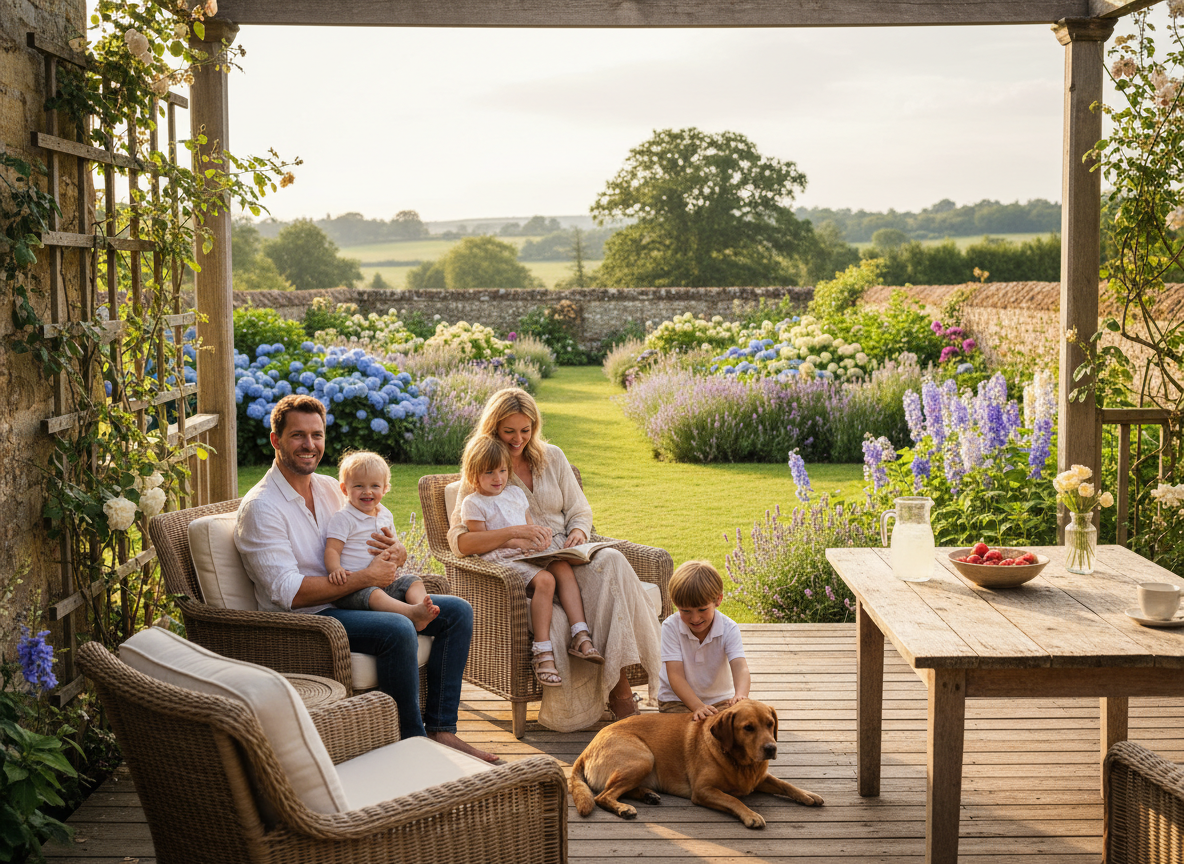
Generation after generation returns to the Labrador. The reasons lie in a temperament shaped by cooperation — a breed whose default setting is goodwill.
It is worth asking, now and then, why a single breed has held the affection of so many families for so long. The Labrador Retriever is not the most elegant dog, nor the most ancient, nor the most specialised. And yet, for generation after generation, it has been the dog families return to. The reasons, when examined, reveal something more profound than mere popularity.
A Temperament Without Sharp Edges
The Labrador's temperament is, in a word, kind. This is not sentimentality; it is the result of generations of selective breeding for cooperative work alongside people. A Labrador was bred to retrieve game gently, to work in close partnership with a handler, and to do so with enthusiasm and without aggression. Those qualities translate directly into domestic life.
A well-bred Labrador does not nurse grievances. They do not hold grudges. They recover quickly from upset and approach new situations with curiosity rather than suspicion. This emotional resilience is, perhaps, the breed's greatest gift to a family — a dog whose default setting is goodwill.
The Family Dog, Tested
Popularity is not always earned, but in the Labrador's case it has been. Decades of family life have tested the breed thoroughly, and the verdict is consistent. Labradors are sturdy with children, patient with the elderly, and sociable with visitors. They are as content on a country walk as they are dozing by the fire, and they adjust their energy to the household around them.
This adaptability matters more than many realise. Some breeds demand an outlet for their instinct — a terrier must dig, a collie must herd. A Labrador's instinct is to be with people, and that is an instinct any family can satisfy.
Intelligence That Wants to Please
Labradors are intelligent, but their intelligence is of a particular, cooperative kind. They are not merely clever; they are motivated to use that cleverness in partnership with a human. This makes them unusually trainable, and training, in turn, deepens the bond. A Labrador who has learned to work with you is a Labrador who looks to you — and that attentive gaze is the foundation of a remarkable companionship.
It is also why Labradors so frequently serve as assistance dogs, search and rescue dogs, and therapy dogs. The same qualities that make them ideal family companions make them suited to work of genuine consequence.
The Importance of Breeding
The Labrador's virtues are not automatic. Poor breeding, lacking environment, and inconsistent training can produce a dog who bears the breed's name without its character. This is why provenance matters. A Labrador from considered, health-tested lines, raised in a home, and given structured training, is an altogether different animal from one acquired without that foundation.
At Manor & Hound, we work only with dogs of exceptional breeding, because temperament and health are not abstractions — they are inherited, shaped, and then refined. The families who receive our dogs are, in effect, receiving the benefit of decisions made long before the dog was born.
A Calm Energy
It is often assumed that Labradors are high-energy dogs, and in puppyhood they certainly can be. But a mature, well-trained Labrador is characterised by a calm, settled presence indoors. They are happy to rest, happy to be near, and happy to engage when invited. This balance of willingness to exercise and willingness to rest is what makes them so suited to modern family life, which rarely offers the extremes of activity some breeds require.
The key, as ever, is training. The calm indoor Labrador is a trained dog. The manic, restless Labrador is usually a dog whose energy has never been given structure. Structure, patiently applied, transforms the breed's natural exuberance into composure.
A Dog Who Grows With the Family
Perhaps the most treasured quality of a Labrador is longevity of companionship. They are puppies briefly, adolescents briefly, and then settled adults for the better part of a decade or more. A Labrador who joins a family with young children grows alongside them, becoming a constant through the changes of family life — a familiar presence at every stage.
Families often tell us that their Labrador became, in time, the thread running through their children's early years. This is not an exaggeration. A steady, gentle dog, present through the ordinary days, becomes woven into the family's memory in a way few other things do.
The Enduring Choice
The Labrador's enduring popularity, then, is not fashion but evidence. Generation after generation has found, in this amiable, adaptable breed, exactly the companion they hoped for. It is a choice that has been made countless times, and proven, countless times, to be a good one.
If you are considering a Labrador for your family, we would be honoured to discuss what that might look like — and to introduce you to dogs who embody the breed at its very best.
Begin the Conversation
If this resonated, we would be delighted to discuss our available dogs, training levels, and how a Manor & Hound companion might fit into your family's life. Each placement begins with a private consultation.